The desk
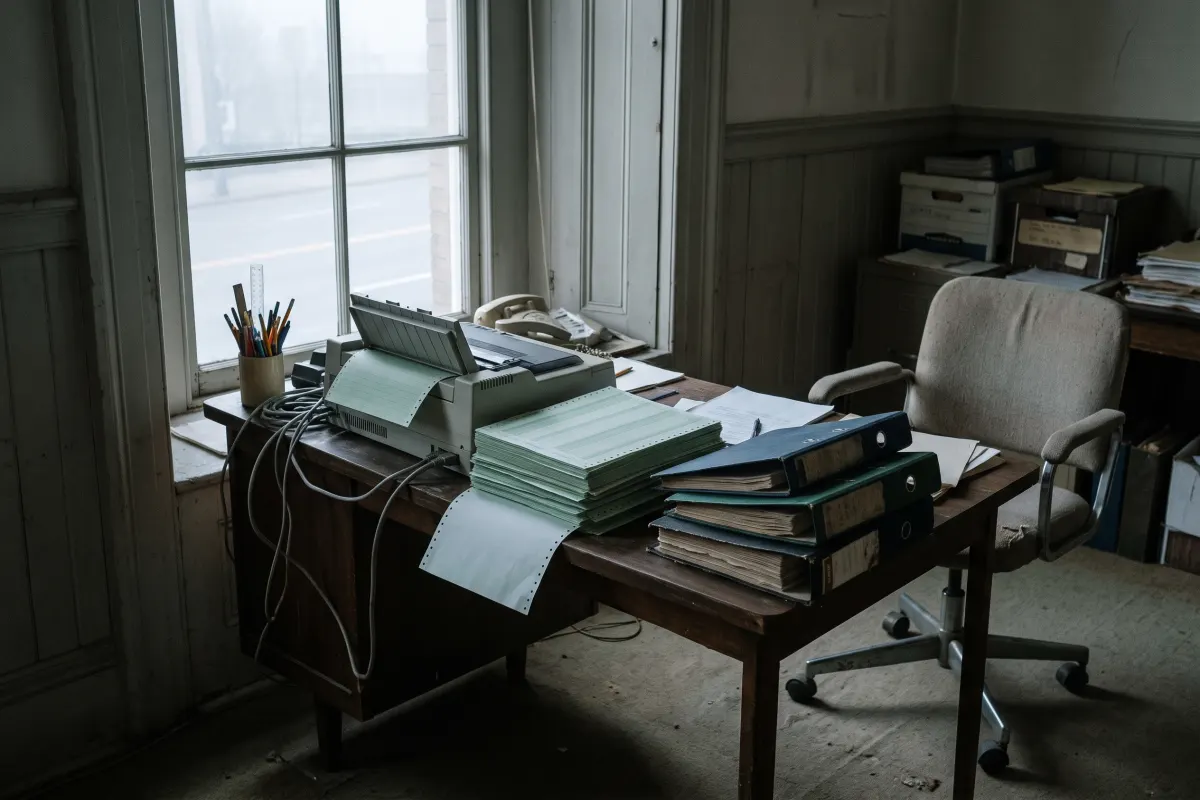
A small desk with a long sheet
Canada's Daily is printed by a record desk of six people in Ottawa. Three read instruments, two print and file, one answers the intake form. The sheet is the publication. Everything else supports it.
Why a continuous form
A record that changes needs a shape that can show change without hiding it. A page can be replaced quietly. A continuous form cannot: the sheet runs through the printer as one piece, and a revision is a new band printed below the old one. That constraint is the whole editorial policy in physical form.
The desk tried loose sheets in its first year. Corrections ended up in someone’s drawer. The binder arrived in the second year and has not been replaced. It holds four months of stock at a time, then goes to the shelf behind the printer, indexed by the month printed on the top band.
How the desk is staffed
Roles rotate weekly so that no one reads the same instrument two weeks running. A reader who has spent a week on tax dates moves to the Commons calendar the following Monday, and the copy check is done by someone who did not write the line.
Day editor
Sets the order of the sheet, decides which lines hold a rust mark, and signs the reset note on Friday.
Instrument readers
Three readers cover federal finance, the House and the provinces. Each keeps a printed copy of the instrument they read, marked in pencil, on the shelf above the printer.
Print and file
Two people run the printer, separate the sheet at the folds, and file the month. They also keep the stock count, which is the only inventory the desk tracks.
Intake
One person reads every note sent through the contact form and routes corrections to the reader who owns the line. Replies go back the same way, never from a personal address.
The third step, in practice
The call to the owning office is the slowest part of the day and the part most often skipped elsewhere. A clerk in a finance department may need an hour to confirm whether a date moved. The desk waits, and the sheet goes out at noon without the line rather than at nine with a guess. Readers have asked why the form is thin. This is the answer.
Printing costs are kept in a separate binder, one page per month: stock, ribbon, postage for returned documents. The desk publishes the yearly total on the inside cover of the December binder, which is the only page of the archive a reader has ever asked to photograph.
What the desk is not
The desk does not chase announcements and does not rewrite releases. It does not publish opinion columns, and it does not sell space on the sheet. There is no advertising file, no sponsored band, and no arrangement in which a department pays for a line to be reprinted.
It also does not claim to be first. A date that is right on Tuesday is worth more to a reader than a date that is early on Monday and corrected on Wednesday. The desk prints when the third step is done, not when the office closes.